The Feminist Studies website is currently undergoing a redesign.

The journal continues to accept submissions. Please submit your manuscripts to submit@feministstudies.org. Submissions should be in the form of an anonymized Word document that does not exceed 10,500 words and follows The Chicago Manual of Style.

For questions about our submission guidelines, including submissions of art work,
please contact Fielding Montgomery (Submissions Editor) at fmontgom@feministstudies.org.

For questions about subscriptions, permissions, or other concerns,
please contact Karla Mantilla (Consulting Managing Editor) at karla.mantilla@feministstudies.org.

News and Views Call for Submissions

January 17, 2026

In 2026, Feminist Studies is inviting submissions for our News and Views section. This dynamic forum showcases concise, incisive feminist reflections that intervene in the urgent debates shaping our current moment.

We seek short pieces (up to 1,500 words) for online and/or print publication that bring distinctly feminist analysis to pressing social, political, cultural, and technological issues, including:

  • Surveillance culture and technology
  • Artificial intelligence and algorithmic power
  • Climate change and environmental justice
  • Fake news, misinformation, and disinformation
  • Censorship and freedom of speech
  • Reproductive justice
  • Racial and gender inequalities
  • Indigenous rights and sovereignty
  • Sexual violence and institutional complicity (e.g., the Epstein files)
  • Me Too/#MeToo and its afterlives

Access Feminist Studies on Project Muse

https://muse.jhu.edu/journal/846

Login through your university https://muse.jhu.edu/account/
For more information, contact subscriptions@feministstudies.org

Notable Previous issue

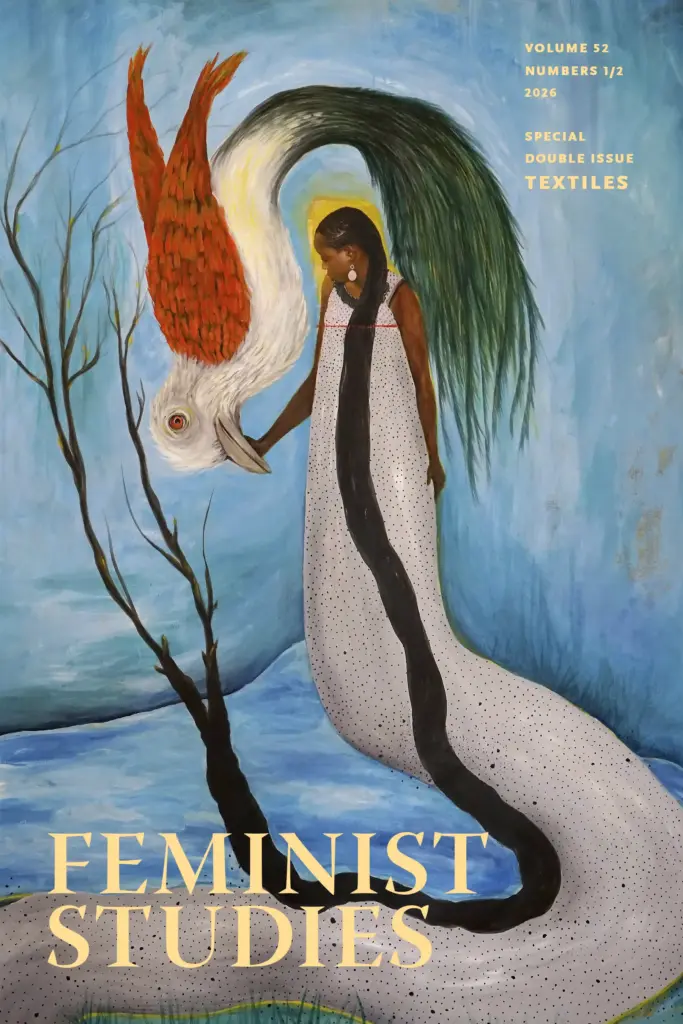
“The history of feminism is, in a sense, a history of autotheory,” writes Lauren Fournier in her 2021 book, Autotheory as Feminist Practice in Art, Writing, and Criticism. This special issue of Feminist Studies features essays, artworks, and an interview that contribute to these intertwined histories by enacting autotheory and/or reflecting on the development of the field. The volume opens with two essays that explore embodied possibilities for living in a world saturated with violence. Cynthia Belmont reflects on deer hunting as an ecofeminist practice, arguing that vegans and subsistence hunters might find common ground in grappling with the complexities and complicities of our relationships to the land and creatures that enable us to live. Megan Sweeney creates a dialogue among three contemporary autotheorists—Christina Sharpe, Arianne Zwartjes, and Melissa Febos—who draw upon their embodied experiences in reckoning with pervasive forms of racialized, nationalized, and gendered violence. | View issue on Project MUSE

  1. Contributors
  2. Cynthia Belmont
  3. Megan Sweeney
  4. Terrion L. Williamson
  5. Devaleena Das
  6. Marshall Azad McCollum
  7. Na Mee
  8. Lyndon K. Gill and Gina Athena Ulysse
  9. Arianne Zwartjes
  10. Eamon Schlotterback
  11. Olivia Ordoñez
  12. Kristen E. Nelson
  13. Azza Basarudin, Tina Beyene, Elora Halim Chowdhury, Sharmila Lodhia, Catherine Z. Sameh, and Khanum Shaikh
  14. Amal Ziv and Maya Lavie-Ajayi
  15. Stephanie Spector, Samantha Auerbach, Julie Laut, Lara Caroline Islinger, and Emaline Marie Reyes
  16. Loubna Qutami, Inderpal Grewal, Caren Kaplan, Sherene H. Razack, Evelyn Alsultany, Minoo Moallem, Elora Shehabuddin, and Nadine Naber
  17. Featuring art by Gina Athena Ulysse

Shim